

What is the Cost to Build a Review Platform Like Trustpilot?
Building a review platform like Trustpilot costs anywhere from $2,000 to well over $100,000, and the gap comes down to trust infrastructure, not the review form itself. A template-based starter site runs $2,000-$5,000, a custom-built MVP with business profiles, review collection, and basic moderation typically costs $15,000-$50,000, and a fully featured platform with enterprise-grade security and a custom rating algorithm can exceed $100,000. For context on what that investment is meant to compete with: Trustpilot itself charges businesses $99-$799/month per domain on paid plans, plus setup fees that can reach $500-$2,000 and mandatory 12-month contracts — a pricing model your own platform will eventually need to replicate to become profitable. The real cost driver isn’t the review submission form; it’s everything that makes reviews trustworthy — automated fraud detection, weighted rating algorithms, business verification, and ongoing human moderation — which is why most successful review platforms end up spending as much on post-launch trust-and-safety operations as they did on the initial build.
Understanding the Cost Range for Building a Review Platform
The cost of a review platform depends on what you are building, who you are building it for, and how far you want to go from day one. A simple review website with basic listings will cost far less than a platform built around building trust with AI moderation, fraud checks, and rich review data.
Your development team, chosen tools, and launch scope all shape the price. In most cases, a basic build may start low, while a custom product can move into much higher ranges. The next sections break down the actual price bands and the factors behind them.
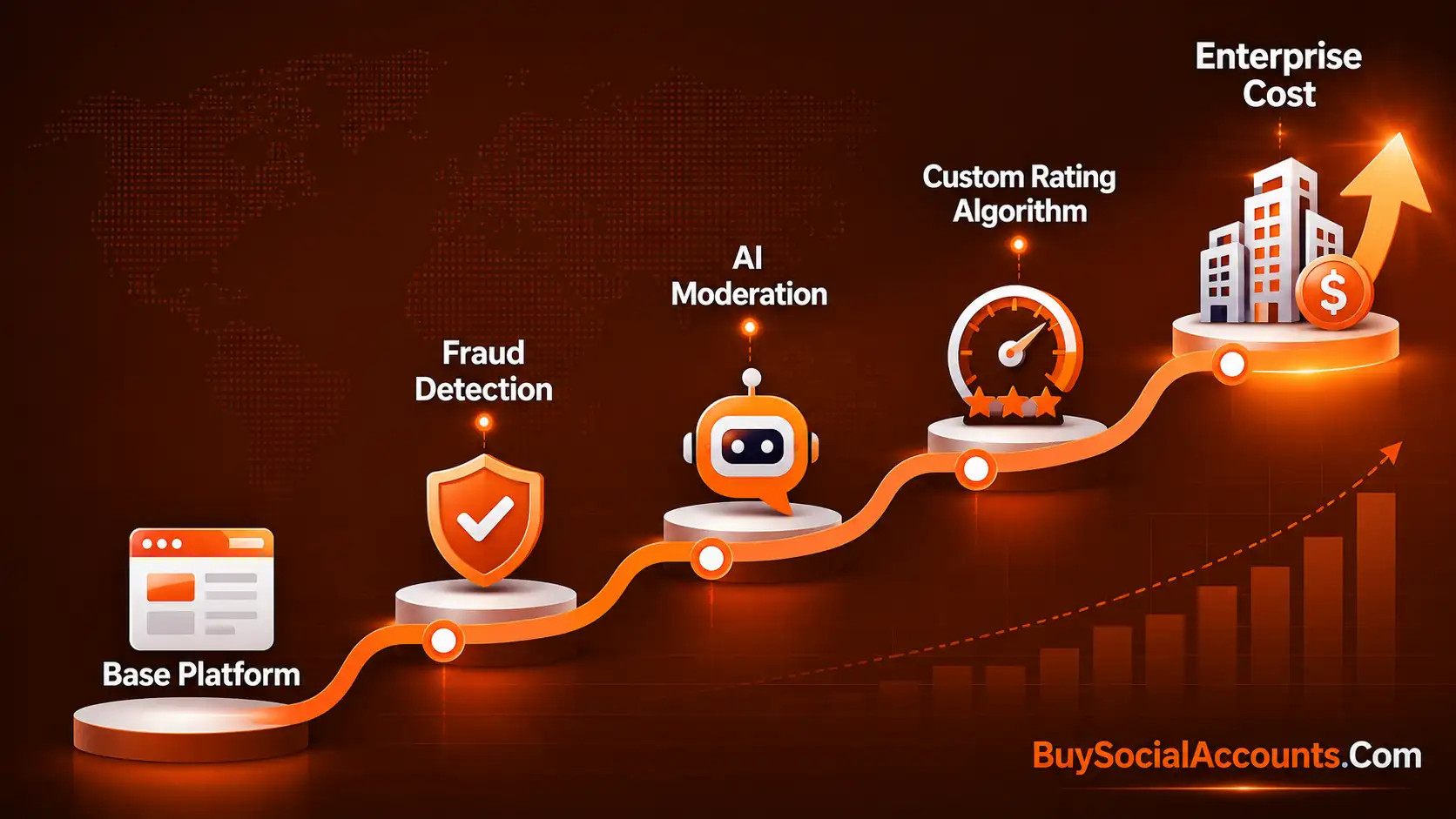
Quick Overview: Typical Price Points
If you want the short answer, a review platform like Trustpilot can start as a lean MVP and scale into a major software product. A template-based review site may cost a few thousand dollars, while a custom build with strong moderation and custom pricing logic often starts much higher. The more trust and automation you need, the more your budget grows.
| Development tier | Typical price point |
|---|---|
| Basic/Template MVP | $2,000–$15,000 |
| Custom-Built MVP | $15,000–$50,000 |
| Full-Featured Platform | $100,000+ |
That spread exists for a reason. A small development team using a simple tech stack can launch faster with fewer features. A larger custom project needs better search, review data systems, scalable moderation, stronger security, and more testing. So, how much does it typically cost to develop a website similar to Trustpilot from scratch? Usually, it falls between $15,000 and $50,000 for a solid MVP, then rises with complexity.
Factors That Influence Pricing
Several moving parts affect the price of a review platform. Feature depth is a major one. A simple rating system is cheaper than a full review engine with verification, moderation, analytics, and business profiles. Your tech stack also matters because some setups support faster launches, while others support long-term scale and heavier review data needs.
Here are the main cost drivers:
- The size and skill level of your development team
- The complexity of your tech stack and database choices
- The volume of review data you expect to manage
- The need for security, fraud prevention, and integrations
There are also less obvious expenses. Scalability planning, ongoing maintenance, API access, and search performance can increase costs later if ignored early. What are the main factors that affect the cost of building a review platform like Trustpilot? In simple terms, features, architecture, trust systems, and future growth needs shape the final number.
Essential Features of a Trustpilot-Like Review Platform
Every review platform needs a reliable core before it adds premium features. That core usually includes user accounts, business listings, a strong review collection flow, and a rating engine that people can trust. Without those basics, even a polished trustpilot alternative will struggle to gain traction.
It also helps to think beyond the first launch. Review widgets, moderation tools, and business-facing controls make the platform more useful over time. The next sections explain the features that matter most and why each one affects cost, trust, and growth.
User Registration and Profile Management
User accounts are one of the first trust layers in any review platform. If you want honest feedback, you need a system that makes it easy for people to sign up while still proving they are real users. That balance improves user experience and protects the platform from low-quality submissions.
A strong setup may include email verification and social sign-ins such as Google or LinkedIn OAuth. These options make registration faster and can support review invites later. Privacy controls also matter because users want clarity about how their information is stored and shown.
This feature is not just about convenience. It helps prevent abuse, improves review quality, and supports better moderation. If you are asking what features should I include in a review platform like Trustpilot, secure registration and profile management belong near the top of the list because trust starts with identity.
Review and Rating Engine
The review and rating engine is the heart of the platform. It needs to let people post opinions, score businesses, and read feedback without friction. A clear star rating system is only the beginning. Strong platforms also collect structured review data that makes each listing more useful.
You may want category-specific scores, verified tags, and support for product reviews or service reviews. Review requests can help businesses gather feedback in a steady way, while a clean layout helps readers compare companies quickly. This turns raw feedback into something buyers can actually use.
The impact goes beyond design. A solid engine improves credibility, search value, and buyer confidence. It also helps business owners respond to feedback in a more organized way. If you are deciding what to build first, this is the feature that gives the entire platform its purpose.
Fraud Detection and AI Moderation
Fake reviews can break a review platform faster than almost anything else. If people doubt the authenticity of your reviews, they stop trusting the site. That is why fraud detection should be part of the foundation, not something added later after damage is done.
Practical tools include email checks, IP tracking, device fingerprinting, and community reporting. On top of that, scalable AI moderation can help flag unusual patterns in review data, such as sudden bursts of similar posts from the same source. This does not replace human judgment, but it gives your team a faster way to catch risk.
Both users and businesses benefit from this layer. Real users want honest content, and businesses want fair visibility. For anyone asking what features should I include in a review platform like Trustpilot, anti-fraud systems and moderation are essential because trust is the product.
SEO Optimization and Analytics
A review platform has a natural SEO advantage because each listing, review, and category page can attract traffic from search engines. If your structure is planned well, the platform can build organic visibility over time. That means dedicated pages for niches, regions, and comparison terms can bring in buyers with strong intent.
Analytics are just as important. Admins need visibility into review volume, traffic, and flagged activity. Businesses often want to know how many people viewed their profile, where visitors came from, and what actions they took. That information can support premium plans later.
This mix of SEO and analytics helps the platform grow instead of sitting still. A review site with useful data and discoverable pages becomes more valuable with every new review. It is one of the clearest examples of how product decisions shape both traffic and future revenue.
Beginner’s Guide: How to Build Your Own Review Platform
Building a review platform starts with clear decisions, not code. You need to know your niche, the type of review website you want, and how your review collection process will work. Without that clarity, it is easy to overspend on features that do not help with building trust.
Once the basics are defined, you can choose a tech stack, outline a budget, and decide how to launch. A lean approach usually works best. The next steps break down what you need, how long it can take, and what to prioritize first.
What You Need to Get Started (Tech Stack, Resources, Budget)
Before building, define the basics. What are your business goals? Are you serving one clear niche or many? What kind of review data will you collect? Your answers will decide how much complexity you actually need and how much money you should spend early.
The common foundation mentioned in the source material includes:
- React or Next.js for the frontend
- PostgreSQL for structured review data
- Elasticsearch for stronger search and filtering
- OAuth tools such as Google or LinkedIn for sign-in
This tech stack impacts both speed and cost. Simpler choices can help a review platform launch faster, while search, moderation, and data-heavy features raise engineering effort. You also need the right resources: a capable team, realistic budget, and a product plan that puts trust first. That is how you avoid building a flashy platform with a weak core.
Step-by-Step Guide/Process
The best way to build a review platform is to move in stages. Start lean, launch with the essentials, and improve based on user feedback. That approach reduces waste and helps you focus on the parts people actually use, such as listings, product reviews, and profile pages.
A simple process looks like this:
- Plan the niche, target audience, and feature scope
- Choose the stack and development approach
- Design the interface, review flow, and review invites
- Build, test, launch, then improve in cycles
How long does it usually take to develop a review website similar to Trustpilot? A focused MVP can often take three to four months. A larger platform with advanced systems may take eight to twelve months. The timeline depends on scope, team size, and how much custom functionality you want at launch.
Step 1: Planning Your Platform and Feature Set
Planning is where many review platform projects either gain focus or lose it. If you do not define your target audience, your niche, and your required feature set early, you will spend money in the wrong places. A broad idea sounds exciting, but it often creates a weak product.
Start by deciding what you are reviewing. Will the platform focus on products, services, or full business listing pages? Then ask who the readers are and what decisions they are making. Strong founders also validate demand by checking communities, conversations, and search behavior before development begins.
One of the main challenges when building and scaling a review platform like Trustpilot is trying to serve everyone at once. The better move is to go narrow, solve a real trust gap, and document clear requirements. A focused starting point usually leads to better growth and lower waste.
Step 2: Choosing the Right Technology and Development Method
The technology you choose shapes speed, cost, and long-term reliability. For a review platform, the source material points to React or Next.js on the frontend, PostgreSQL for structured data, and Elasticsearch when stronger search is needed. These choices support a cleaner review site and better scaling as content grows.
Your development team model matters too. Working with an experienced team can save time and reduce mistakes, especially when trust systems are involved. A weaker setup may look cheaper at first but create bigger costs later through poor architecture or missing fraud controls.
So, what tech stack is commonly used to build a review platform like Trustpilot and how does it impact costs? Modern frontend tools, strong databases, and search layers are common because they support speed and usability. Costs rise when you add customization, security, moderation, and scalable infrastructure.
Step 3: Designing User Interface and Experience
Design matters because trust is visual before it is technical. If your review platform feels slow, cluttered, or confusing, users may doubt it before reading a single review. A clean user experience creates confidence and makes it easier for people to search, compare, and contribute.
The source material highlights clear review cards, easy navigation, fast loading, and smart filtering. These are not cosmetic extras. They help a busy decision maker find useful information in seconds. Good design also supports your clear niche by organizing listings and categories in a way that feels obvious.
What features should you include from a design angle? Focus on readable review cards, simple navigation, clear business profiles, and a submission flow that does not frustrate users. When the experience feels dependable, review volume and buyer trust are more likely to grow together.
Step 4: Building, Testing, and Launching
Once planning and design are locked in, development begins. This is where the review platform takes shape through coding, integrations, moderation rules, and search logic. You are not just launching a review site. You are building a system that must store review data accurately and present it clearly.
QA testing is critical because errors damage trust fast. Broken ratings, duplicate profiles, poor filtering, or weak login flows make the platform feel unreliable. Testing should cover review submission, moderation tools, search behavior, profile pages, and any API access planned for premium users or data products.
After fixes and final checks, launch with a lean version and improve from real usage. How long does it usually take to develop a review website similar to Trustpilot? For an MVP, three to four months is realistic. Bigger builds with more custom systems take much longer.
Comparing Cost Tiers for Development
Not every review platform needs the same level of investment. Some founders only need a lightweight start, while others want stronger branding, scalability, and advanced features from the beginning. That is why cost tiers matter. They help match your budget to your goals instead of overbuilding too early.
Custom pricing usually reflects complexity, launch speed, and the type of development team involved. In the next three sections, you will see what businesses can expect at the basic, mid-range, and enterprise ends of the market.
Basic/Template MVP ($2,000–$15,000)
A basic or template MVP is the fastest way to launch a simple review platform. It usually includes essential pages, a review form, basic profiles, and standard design components. If your goal is to test demand before spending heavily, this tier can work well. It focuses on speed and ease of use more than customization.
Typical trade-offs include:
- Faster launch but fewer unique features
- Lower cost but limited scalability
- Basic design with less brand flexibility
- Simple tools, often without deep fraud systems
This level suits early founders, niche experiments, or small teams validating a review website idea. It may also compete well against some low-cost trustpilot alternative tools in terms of upfront price. Still, once review volume grows, the limits show quickly. That is why many teams use this tier only as a temporary first step.
Custom-Built MVP ($15,000–$50,000)
A custom-built MVP gives you more control over the product and a better foundation for growth. This is the range where many serious founders start if they want a real review platform rather than a simple directory. You can shape the flows, branding, trust features, and review invites around your niche.
What you gain at this level:
- More flexible branding and feature control
- Better support for growing businesses and higher review volume
- Room for stronger moderation and data structure
- A clearer path to monetization and custom pricing later
This tier usually offers the strongest balance between budget and usefulness. It often takes a few months to build and gives you a product that can evolve with real demand. Compared with cheaper alternatives, it costs more upfront, but the long-term ROI can be better if your niche shows traction.
Full-Featured Platform ($100,000+)
A full-featured platform is built for scale, not just launch. This level is for founders or companies that want a serious review platform with strong infrastructure, deeper analytics, fraud systems, and more advanced features from the start. It is closer to an enterprise product than a startup test.
This investment can include:
- API access and data product capabilities
- Rich analytics and premium business dashboards
- Strong moderation workflows and fraud controls
- Infrastructure built for high traffic and review volume
Who should invest here? Usually, it is best for teams with clear market validation, funding, or enterprise level resources. One of the main challenges when building and scaling a review platform like Trustpilot is keeping trust intact while usage expands. This tier helps solve that problem, but only if the business case is already strong.
Advanced Features That Increase Development Costs
Some features add major value, but they also increase cost fast. These are the systems that protect trust, improve accuracy, and support growth when review volume starts rising. They are not always needed on day one, yet they often become necessary as the platform matures.
The biggest cost drivers in this group are real-time fraud detection, automated scoring logic, and scalable AI moderation. Each one needs more planning, testing, and infrastructure. The next sections explain why these tools matter and why they raise budgets.
Real-Time Fraud Detection
Real-time fraud detection means your platform checks suspicious behavior as it happens instead of waiting for manual reports later. For a review site, that is a powerful defense because fake reviews can spread quickly and damage confidence before your team notices.
A practical setup may combine email verification, IP monitoring, device fingerprinting, and rules that flag unusual posting patterns. AI moderation can then help surface risky submissions for review. This layered approach improves the authenticity of your reviews and reduces the chance of coordinated abuse.
Why does it cost more? Because the logic is more complex, the infrastructure must respond quickly, and the system needs ongoing tuning. If you are asking which features add significant costs to building a review platform, real-time fraud detection belongs high on the list because trust depends on it.
Automated Rating Engine
An automated rating engine does more than average a star rating. It organizes review data into useful scores, category breakdowns, and signals that help buyers compare options faster. This turns raw opinions into structured guidance for decision makers.
As review volume grows, the value of automation grows too. Users can understand trends more easily, and businesses can see clearer patterns across categories or time periods. A strong engine may also support verified tags and weighted inputs depending on how the platform is designed.
The added cost comes from logic, testing, and quality control. If the system produces confusing or unfair results, trust drops fast. That is why an automated rating engine is both useful and expensive. It needs careful maintenance so the output remains accurate as the platform expands.
Scalable AI Moderation
Scalable AI moderation helps a review platform handle growing amounts of user feedback without relying only on manual review. At low volume, humans may manage well enough. At higher volume, that approach becomes too slow and too expensive on its own.
AI can help spot spam, repeated wording, strange posting spikes, and other signals linked to fake reviews. It can also support a moderation queue so people focus on the most suspicious cases first. This makes operations more efficient and helps keep the platform cleaner as usage expands.
Still, scaling AI tools is not simple. Models need tuning, false positives must be reduced, and edge cases require human checks. That means more engineering time and more oversight. The budget impact is real, but so is the value. Better moderation protects credibility, which is the whole business.
Build vs Buy: Exploring White-Label Solutions
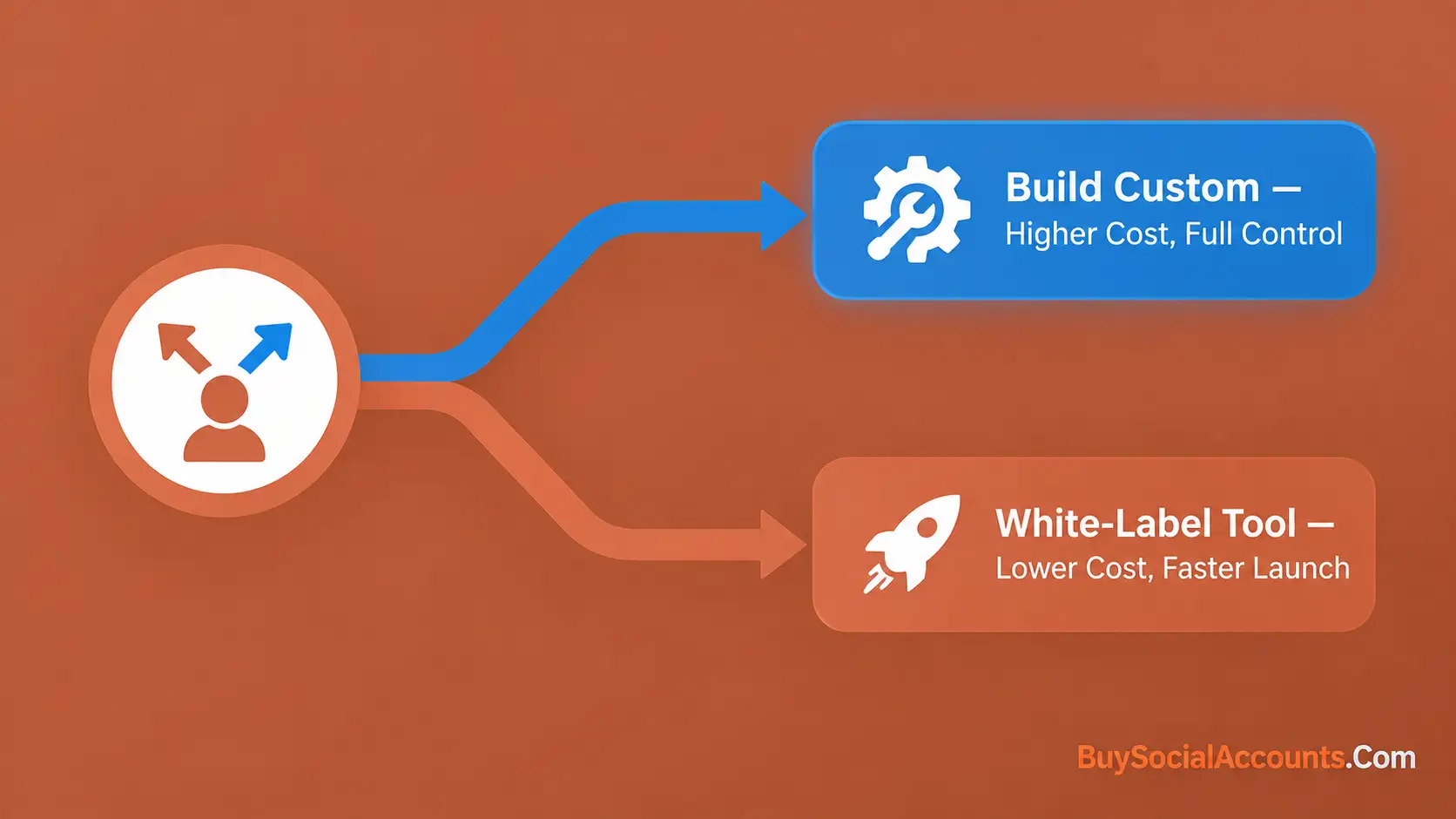
Not every company should build a review platform from scratch. In many cases, a white-label option or another ready-made trustpilot alternative can solve the problem faster and for less money. The right choice depends on your business goals, timeline, and how much control you truly need.
If you want a branded review website quickly, buying can make sense. If you need deeper customization, unique workflows, or long-term ownership, building may be worth the cost. The next sections compare where each path fits best.
When a White-Label Tool Makes More Sense
A white-label solution often makes sense when speed and budget matter more than deep customization. You can launch a branded review platform faster, avoid a long build cycle, and reduce upfront spending. For many teams, that is enough to test market demand without committing to a full product roadmap.
This option is especially useful when:
- Small businesses need a lower-risk start
- Ease of use matters more than custom workflows
- Time to launch is more important than ownership
- The team wants to validate a niche before building
Are there cost-effective alternatives to building a custom review website like Trustpilot? Yes, white-label tools can be a practical answer. The trade-off is flexibility. You may get less control over data structure, design depth, or future expansion. That is why this route works best when simplicity is the main priority.
Pros and Cons of Custom Development vs Platforms
Choosing between custom development and an existing platform depends on budget, speed, and long-term plans. A custom review platform gives business owners full control, but it costs more and takes longer. A ready-made platform or trustpilot alternative lowers the barrier to entry, though it limits ownership.
Quick comparison:
- Custom build: more control, stronger branding, higher cost
- Platform solution: faster setup, lower upfront spend, less flexibility
- Custom pricing: possible in owned software, limited in packaged tools
- Growth path: broader with custom, simpler with ready-made products
Is it better for a small business to use Trustpilot’s plans or invest in building their own review site? In most early-stage cases, using an existing platform is the easier move. Building makes more sense when the company has a specific niche strategy, clear product vision, and budget for long-term development.
Ongoing Costs After Launch
Launching your review platform is only the start. After release, the real operating costs begin. A review website needs constant attention to stay fast, accurate, and trusted. If you ignore those costs, the platform can quickly become harder to manage and more expensive to fix later.
The main post-launch expenses usually include hosting, infrastructure, moderation, customer support, and legal or compliance work. These are not optional for long-term success. The next section starts with the technical side of that ongoing cost picture.
Hosting and Infrastructure
Creating a robust hosting and infrastructure setup is essential for any reliable review platform. The choice of servers affects both performance and user experience. Scalable solutions like cloud services ensure that the platform can handle spikes in traffic, especially during peak review collection periods. A solid tech stack, including database management and content delivery networks, improves loading times and enhances customer feedback systems. It’s also crucial to include security measures to protect against fake reviews and maintain the authenticity of your reviews.
Moderation and Support Team
An effective moderation and support team forms the backbone of a successful review platform. Their role is pivotal in ensuring the authenticity of customer reviews and mitigating the impact of fake reviews, which can undermine trust. A dedicated support team responds to user inquiries and manages review invitations, reinforcing user experience. Investing in trained professionals who can handle content moderation, offer customer support, and maintain the integrity of review data is essential to achieving your business goals and building long-term credibility.
Legal, Compliance, and Maintenance
Navigating the legal landscape is essential for a review platform’s success. Compliance with data protection laws and regulations, such as GDPR, ensures user data is handled responsibly. Additionally, ongoing maintenance is crucial to safeguard against potential fake reviews and ensure authenticity, fostering user trust. Investing in legal expertise and comprehensive moderation tools can help maintain the integrity of customer feedback. Keeping your platform compliant not only protects your business but also builds credibility in the eyes of real customers and potential businesses looking for a solid trustpilot alternative.
How Trustpilot Makes Money: Business Model Insights
Trustpilot operates on a multi-faceted business model that capitalizes on customer feedback and review collection to create value for businesses. Subscription plans offer various tiers, allowing companies to showcase real user reviews prominently on their dedicated landing pages. Additionally, they provide premium features, such as API access and detailed comparison exports, enhancing user experience. Value-added services, including reputation management and SMS marketing, further amplify client engagement, positioning Trustpilot as a pivotal player in building trust and social proof for local businesses and ecommerce brands.
Subscription Plans for Businesses
Various subscription plans cater to different business needs when looking to establish a review platform. A basic plan often provides essential functionalities, ideal for small businesses seeking to collect customer feedback with minimal investment. More advanced tiers may include features such as API access and comprehensive analytics, enhancing user experience and enabling businesses to gather deeper insights from review data. Tailored options ensure alignment with specific business goals, allowing enterprises to scale effectively while managing reputation and fostering customer trust.
Value-Added Services and Partnerships
Integrating value-added services and fostering partnerships can significantly enhance the appeal of your review platform. Features like premium analytics, reputation management tools, and integration with CRM systems enrich user experience and offer businesses deeper insights into customer feedback. Collaborations with ecommerce brands or social proof providers can drive review volume while boosting credibility. Features such as customized review widgets or targeted review requests not only attract potential customers but also help small businesses leverage powerful customer reviews effectively, creating lasting relationships and trust.
Frequently Asked Questions
What are the main factors that affect the cost of building a review platform?
Several key factors influence the cost of building a review platform, including the choice of hosting and infrastructure, the complexity of moderation tools, legal compliance requirements, ongoing maintenance, and support team salaries. Each element contributes significantly to the overall budget.
How long does it usually take to develop a review website like Trustpilot?
The development timeline for a review website like Trustpilot typically ranges from three to six months. Factors influencing this duration include design complexity, feature requirements, and the size of the development team. Thorough planning can help streamline the process.
Are there affordable alternatives to custom-built review platforms?
Yes, several affordable alternatives to custom-built review platforms exist, including ready-made solutions like Trustpilot and others. These platforms offer customizable features at lower costs, making them a viable option for businesses looking to establish a review system without extensive investment.
How do ongoing maintenance costs compare between custom sites and hosted solutions?
Ongoing maintenance costs can vary significantly; custom sites often incur higher expenses due to the need for dedicated developers and infrastructure, while hosted solutions typically offer predictable pricing with included support. Assessing your specific needs is crucial in determining the most cost-effective option.
Conclusion
Creating a review platform like Trustpilot involves careful consideration of various factors including development costs and ongoing maintenance. While a basic MVP can start around $2,000, a more custom-built solution jumps to $15,000 or more, potentially exceeding $100,000 for a feature-rich platform. Understanding your target audience and aligning with their needs is crucial. As businesses pursue customer feedback and review collection, choosing the right tools tailored for your strategy can lead to impactful results and enhanced user experience.



No Comments